Sample reports
See exactly what you receive.
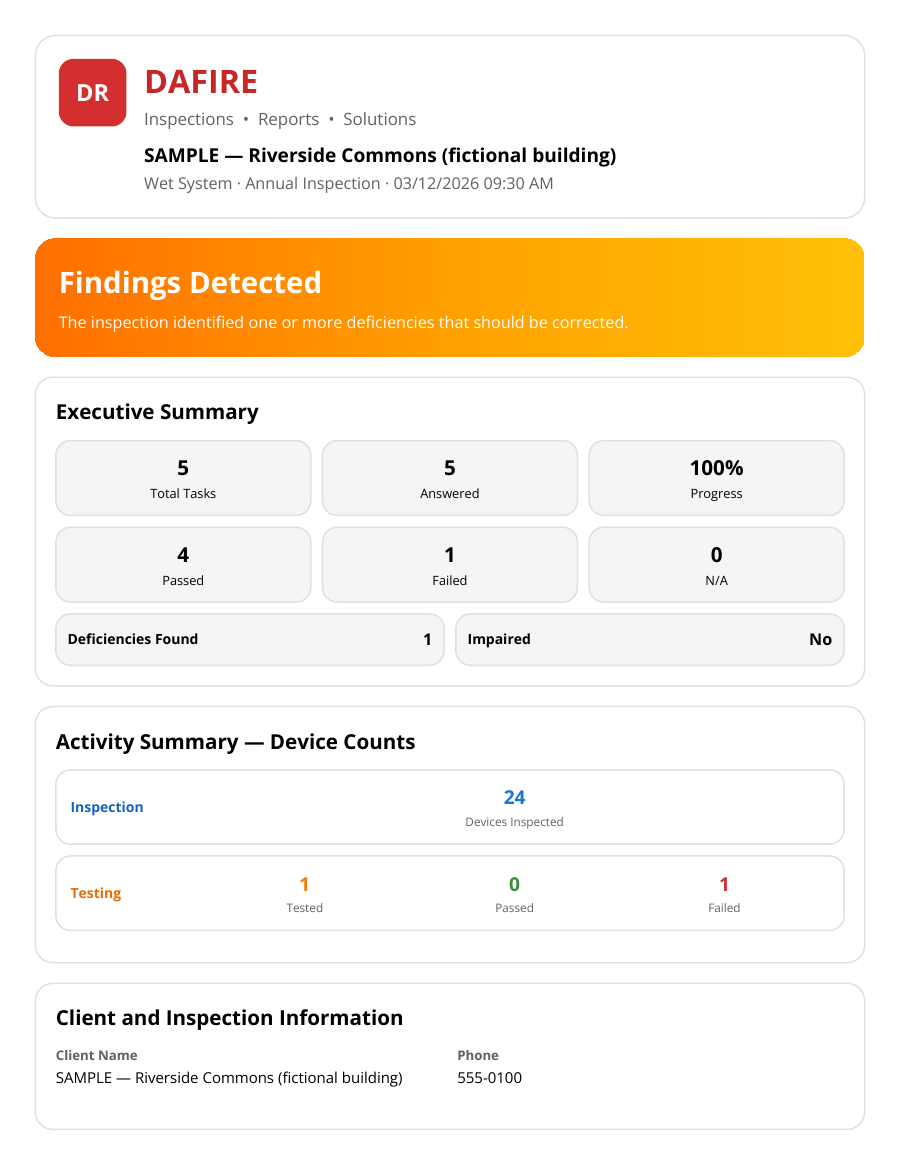
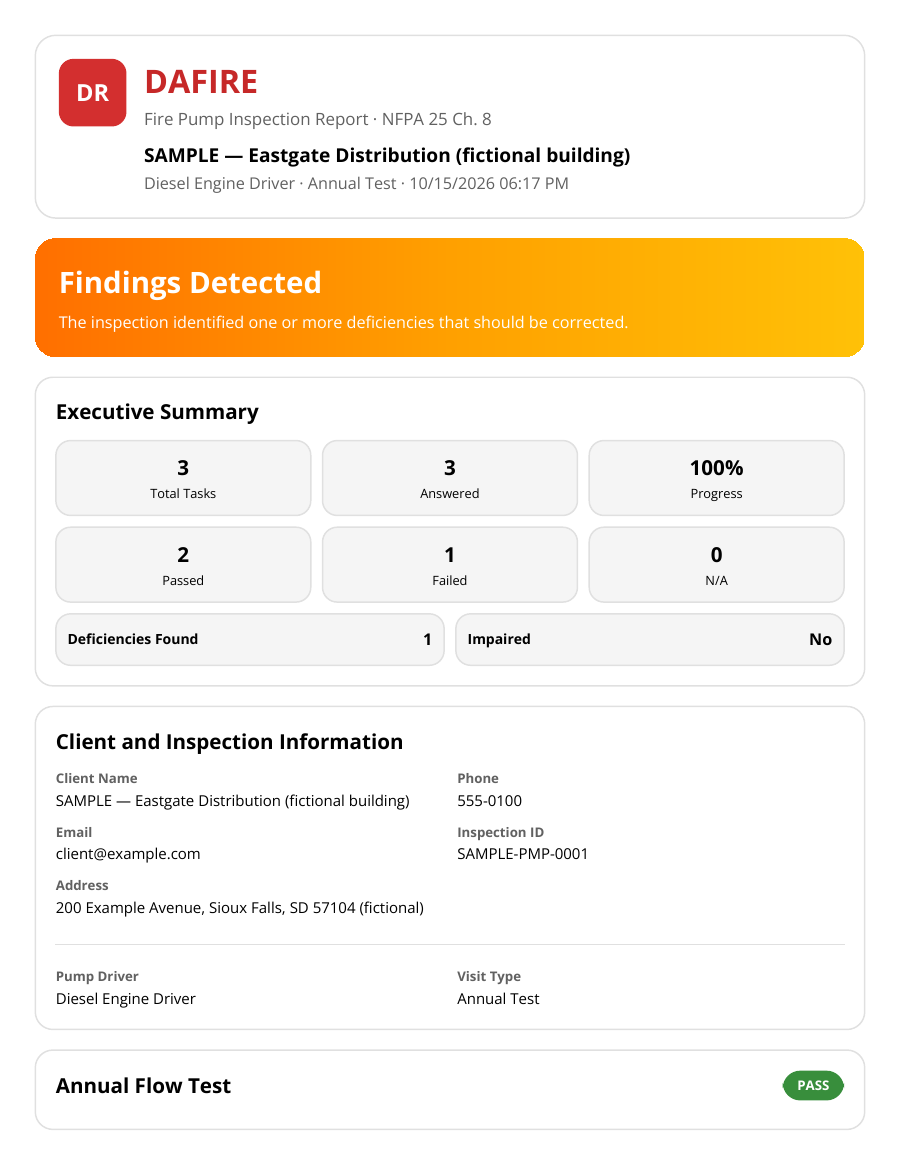
Two reports generated by our app from fictional buildings and clearly marked SAMPLE. No real client data.
Fire protection inspections are only useful if the paperwork is complete, clear and easy to find a year later. This is how every visit works.
Tell us about your building and the systems you have. We follow up with next steps.
Our technician works through the NFPA checklist for each system and records results, notes and photos in our app — even with no signal.
A PDF with NFPA references, photos, signatures and a quote for any deficiency found, ready to show an inspector.
Your history stays in one place, open deficiencies stay on our list until they are resolved, and we schedule your next visit.
Two reports generated by our app from fictional buildings and clearly marked SAMPLE. No real client data.
Each item on the checklist names the section of the standard it comes from.
Photos attached to the findings they document, so nothing depends on memory.
For sprinkler systems, each failure is classified from NFPA 25's own deficiency table as a suggestion the technician can override, with a recommended action and a quote.
The main drain test and the fire pump flow test print the readings, the threshold and the pass/fail result.
Signed by the technician and by your representative on site.
We keep a copy of every report, so a past visit is easy to find when an inspector asks.
Nothing is saved without a technician's review.
If the same issue shows up twice at the same building, our system flags it on its own — no comparing past visits by hand.
Basements and mechanical rooms rarely have good signal. Inspections are saved on the device and sync on their own when the connection returns — nothing is lost.